
Water conservation is a practice that has existed for centuries. Even hundreds of years ago, there were huge water storage structures. These did not just store water but also protected cities from floods, provided drinking water, and brought people together.
Today in many parts of India, many communities still practice the traditional water management methods. In Tamil Nadu, Ooranis store rainwater for drinking and farming. In Kerala, Panam Keni wells are known for not drying up even in the hottest months. Similarly, Tankas as shown below are quite common in Rajasthan’s Thar region.
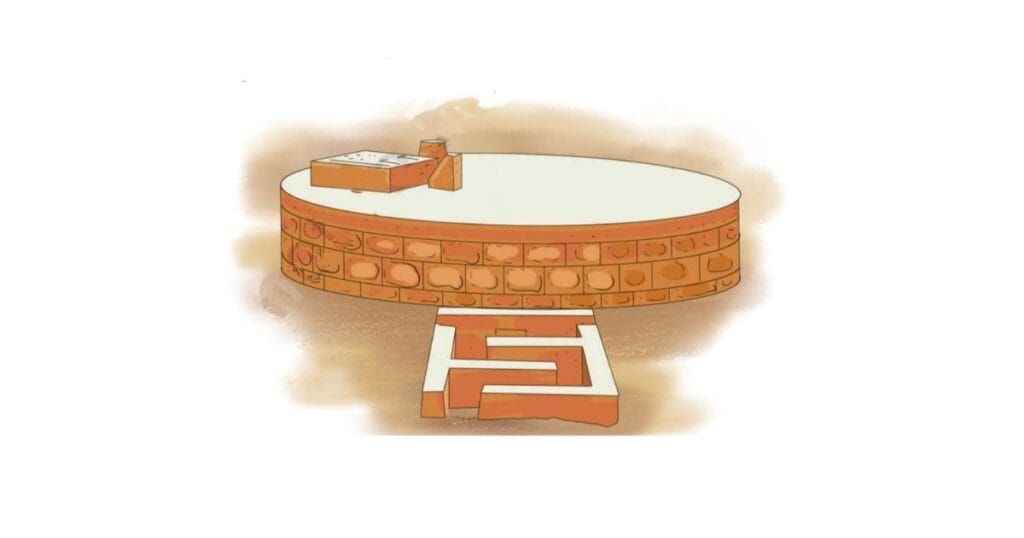
They are underground tanks that can store enough water for six to seven months.
Nowadays most people have water tanks to store water in their homes. These tanks store hundreds and even thousands of litres of water. Usually, they are kept or built on the roofs. Such water tanks are called overhead water tanks.

Most of us are familiar with water tanks but there is something different about the overhead tanks of Punjab.
Punjab is a state in the northwestern part of India. Rich in culture and heritage, Punjab is also known for the unique designs of water tanks in its rural areas. You may see tanks shaped like a giant flower, a large football, a brown rooster, a statue or even an aeroplane.
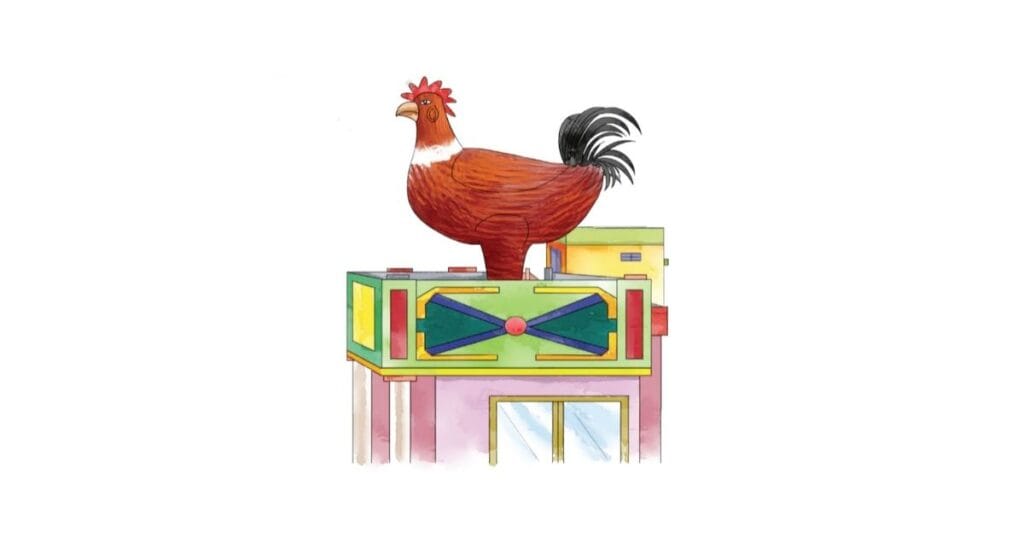
People carefully plan the design of their water tanks. Every tank tells us something about the people of the house. For example, if the owner of the house is a farmer, the water tank may be in the shape of a tractor or a bullock cart or even a rooster. If the owner likes football, the water tank of the house may be shaped like a football.
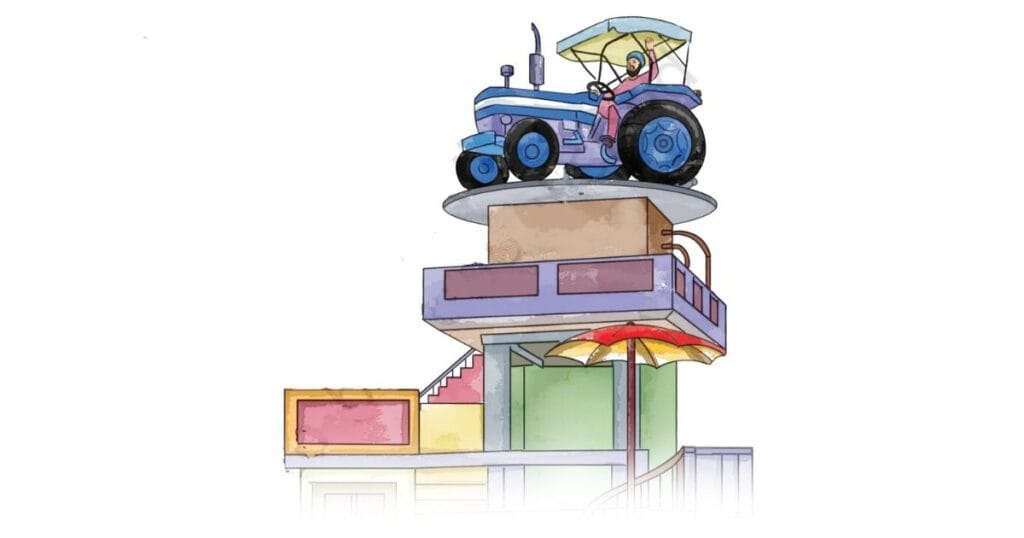
All these tanks are made of cement. The frame of the water tank is made using steel rods. Later, concrete is used to give it final shape. Then it is installed on the roof of the house. The final product is a unique tank that can hold hundreds of litres of water. These unique water tanks are the heart of the communities in rural Punjab.
Also read this: The Frog : Lesson -5
Let us Think
A. Answer the following questions.
1. What do we use a water tank for?
Ans. We use a water tank to store water for drinking, cooking, washing, and other daily needs.
2. Where is Punjab located on the map of India?
Ans. Punjab is located in the north-western part of India.
3. How are the water tanks in Punjab made?
Ans. The water tanks in Punjab are made of cement. Their frame is prepared using steel rods, then concrete is used to give them a final shape, and finally they are installed on the roofs.
4. How do the unique shapes of water tanks reflect the identity of the house owners?
Ans. The shapes of the water tanks show the interests or profession of the house owners. For example, farmers may have tanks shaped like tractors or roosters, while football lovers may have football-shaped tanks.
B. Think and answer
1. An overhead water tank is a way to store water. Do you know any other ways of storing water?
Ans. Yes, water can also be stored in wells, ponds, tanks, rainwater harvesting pits, tankas, and underground reservoirs.
2. If you had to build a water tank, what would you make it look like? Why?
Ans. I would make my water tank in the shape of a book because it shows the importance of education and learning.
